
36D Bra Size
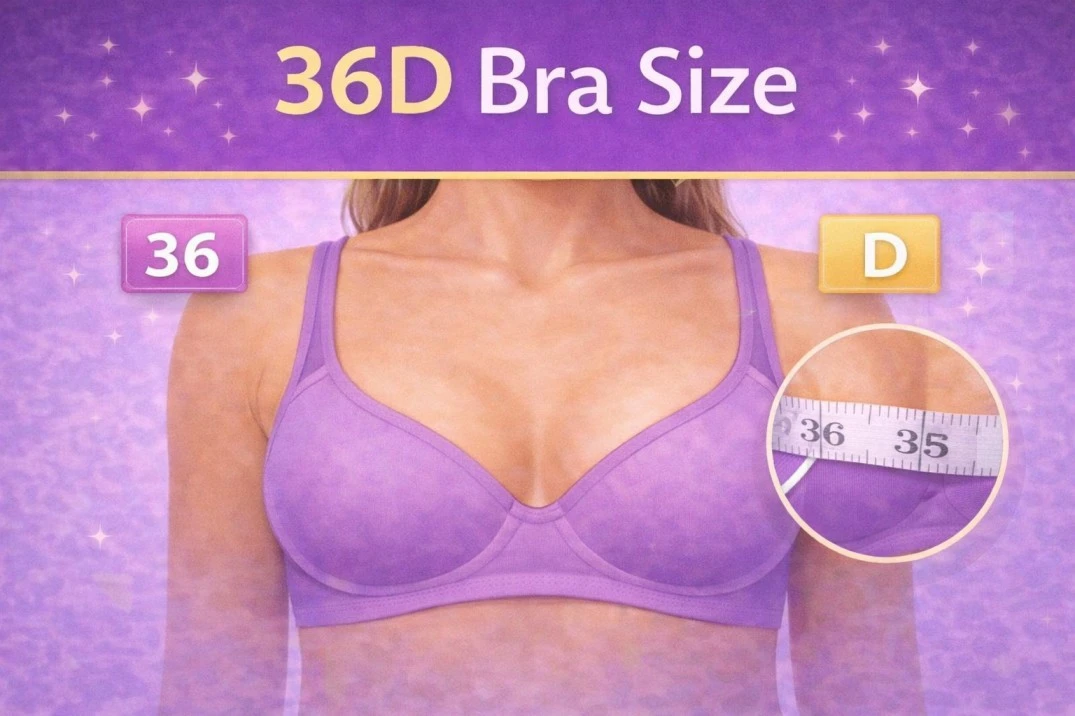
36D bra size means a bra with a 36-inch band and a D cup volume that represents the difference between the underbust and bust measurement. The band gives the main support, while the D cup shows how much breast volume sits on that band size.
This page explains what a 36D bra size means, how it fits different body types, how it compares to other sizes, common fit issues, sister sizes, and how to check whether it is the right size for you.
What Does 36D Bra Size Mean?
If you’re trying to understand what is 36D bra size, it helps to break it into its two measurement-based parts: the band number and the cup letter.
Band “36” – Ribcage Measurement
The number 36 refers to the band size, based on an underbust measurement taken snugly around the ribcage, just below the bust. A 36 band typically fits people with underbusts measuring 35 to 36 inches, providing stable support for a medium-to-wide chest. The band is responsible for most of the bra’s support, not the straps.
Cup “D” – Bust Difference
The letter D represents cup volume, calculated as the difference between the bust and underbust measurements. In standard sizing systems, a 36D cup size usually reflects a difference of about 4 inches between the bust and the band. This means the bust is fuller relative to the ribcage, requiring deeper cups for proper containment and balanced support.
Simple Measurement Example
If your underbust measures close to 36 inches and your bust measures around 40 inches, the 4-inch difference places you in a 36D size based on measurement logic. This simple calculation determines cup size, not by appearance or clothing size.
36D Bra Size in Inches and Centimeters
Below is a general measurement reference for understanding 36D bra size in cm and inches based on standard sizing methods:
|
Measurement |
Inches |
Centimeters |
|
Band (Underbust) |
35–36 in |
89–91.5 cm |
|
Bust (Overbust) |
39–40 in |
99–101.5 cm |
|
Cup Difference |
~4 in |
~10.2 cm |
36D Cup Size Explained
Cup size explains how breast volume is supported and positioned within the bra. In a 36D, both the band width and cup depth work together to determine how the bust sits, how weight is distributed, and how support is provided.
Cup Volume and Shape
A 36D breast size falls into the moderate-to-full cup volume range when measured correctly. The cup depth is designed to support a fuller bust on a medium-width band, meaning the cups are not only wider but also deeper to allow proper forward projection and natural positioning. This structure helps prevent flattening, side spillage, and pressure points on the breast tissue.
Compared to a C cup on the same band, a 36D cup holds more volume because of the larger bust-to-band difference. A 36C typically reflects about a 3-inch difference, while a 36D reflects about a 4-inch difference. That single inch creates a real structural change in fit, requiring deeper cups and more internal support to keep the bust properly contained and supported.
Breast shape can still vary even within the same size. Some people carry fullness at the bottom, others at the top, while some have wider breast roots or more side fullness. This means two people with the same 36D measurements can experience very different fits depending on how their breast tissue is distributed within the cup.
Comparison Example
To understand how volume works across sizes, it helps to look at equivalent measurements. A 36D bra size equivalent can be found in sizes that share similar cup volume but use different band and cup combinations.
-
36D vs 38C: Both sizes can feel similar in cup volume, but 38C has a looser band and slightly wider cups, while 36D has a firmer band with deeper cup projection.
-
36D vs 34DD: These sizes have comparable cup volume, but 34DD has a tighter band and deeper cups, while 36D offers more band width with slightly less cup depth.
These comparisons show that cup volume remains similar while band width and cup structure change, directly affecting fit, support, and comfort.
How 36D Boobs Look on Different Body Types
A 36D bra size example can look and feel very different depending on body structure, height, ribcage width, and breast shape. The focus is not on appearance, but on proportion, balance, and how comfortably the size supports the body in daily wear.
Petite Frames
On petite frames, a 36D may feel more prominent because the band width takes up more space across the torso. Proper band tension and structured cups are important for keeping the bra sitting high on the chest and preventing the weight of the bust from pulling the band downward.
Average Frames
For average body types, 36D often sits well when properly fitted. The band usually lies flat across the back, and the cups provide enough depth for support without feeling heavy or restrictive during normal movement.
Fuller Ribcage
For people with a fuller ribcage, a 36D typically feels natural and well-proportioned. The wider band helps distribute weight evenly, while the deeper cups provide proper containment and stability throughout the day.
Breast Shape Variations
Breast shape plays a major role in fit. Fuller-bottom shapes may need more depth at the base of the cup, while wider-set breasts often feel more comfortable with side support. Even within the same size, differences in shape can change how a 36D fits and feels in different bra styles.
Best Bra Styles for 36D
Choosing the right bra style is important for comfort and long-term support in a 36D size. Because this size combines a medium-width band with deeper cups, structure and fit play a big role in how well a bra performs throughout the day.
T-shirt bras
T-shirt bras work well for 36D because they offer smooth, evenly shaped cups that distribute breast weight across the band. The molded structure helps maintain natural shape while providing consistent support under fitted clothing.
Full-coverage bras
Full-coverage bras are ideal for containing fuller cup volume. In a 36D, they help prevent spillage at the top and sides while keeping the bust stable and supported during long wear.
Balconette bras
Balconette styles suit 36D by lifting the bust from below and providing structured support through the lower cup. They help create balance and support without needing heavy padding.
Supportive sports bras
Sports bras are essential for physical movement. In a 36D size, a supportive sports bra helps control motion, reduces strain on the shoulders and back, and keeps the band firm for proper weight distribution.
Structured bralettes
Structured bralettes with defined bands and light internal support can work well for 36D in everyday use. They offer comfort and shape while maintaining enough structure to prevent sagging or strain.
Sister Sizes of 36D Bra
Sister sizing refers to bra sizes that share the same or very similar cup volume but differ in band length. This allows you to adjust band tightness without changing the amount of space the cups provide.
If the band feels tight: 36D → 38C
If your 36D feels restrictive around the ribcage but the cups fit well, moving up a band and down a cup can improve comfort. This keeps the cup volume similar while giving more room around the ribs.
If the band feels loose: 36D → 34DD
If the band rides up or feels unstable, but the cups feel fine, moving down a band and up a cup can give better support. This provides a firmer band with similar cup volume. It is also commonly referred to as a 36DD sister-size relationship when adjusting between these measurements.
Sister sizing is useful when you are between sizes, switching brands, experiencing body changes, or dealing with fabric stretch. It helps fine-tune fit without changing overall breast volume, improving comfort and support while keeping cup capacity consistent.
International Conversion Chart for 36D Bra Size
Here is a quick reference to see how 36D converts across common international sizing systems:
|
Region |
Equivalent Size |
|
US |
36D |
|
UK |
36D |
|
EU |
80D |
|
FR |
95D |
|
IT |
4D |
|
AU |
14D |
International sizing can vary slightly by brand, so checking brand-specific size charts is helpful when buying across regions.
Tips to Maintain a Perfect Fit
Maintaining a good fit is not only about choosing the right size. Daily care habits and regular checks help your bras stay supportive and comfortable over time.
Replacing bras
Bras lose elasticity with regular wear, especially in the band. If your bra no longer feels supportive even on the tightest hook, it is a sign that the elastic has weakened and the bra should be replaced.
Washing care
Gentle washing helps preserve fabric, shape, and structure. Hand washing or using a lingerie bag on a gentle cycle reduces strain on the cups, straps, and hooks, helping the bra keep its original fit longer.
Rotation
Wearing the same bra every day causes faster stretching. Rotating between multiple bras allows the elastic to recover between wears and helps each bra maintain its support and shape.
Common Fit Issues and How to Fix Them
Even when measurements indicate a 36D, fit problems can still occur due to body shape, fabric stretch, or bra design. These are common issues and practical ways to fix them.
Band support issues
If the band rides up your back or feels loose, it is not providing enough support. Most of the bra’s support should come from the band, not the straps. Try fastening the bra on a tighter hook first. If the band still feels unstable, moving to a firmer band through sister sizing can improve support and balance.
Cup overflow or pressure
Spillage at the top, sides, or center of the cups usually indicates that the cup's volume or shape is not right. Pressure on the breast tissue can also happen if the cups are too shallow. Switching to a deeper cup shape or adjusting the cup size can improve containment and comfort.
Strap strain
Straps that dig into the shoulders often indicate that the band is not doing enough work. Loosen the straps slightly and check the band fit. The straps should support the shape, not carry the weight of the bust.
When to re-measure
Changes in the body from weight shifts, hormones, or lifestyle can affect bra fit. If your bras suddenly feel uncomfortable, loose, or tight, remeasuring your underbust and bust can help confirm whether your size has changed and guide better-fitting choices.
Final Thoughts
A 36D bra size combines a medium-width band with deeper cups to provide balanced support and a structured fit when measurements are accurate. Because body shape and size can change over time, regularly remeasuring your bust and underbust helps ensure your bras continue to fit comfortably and support you properly. Find your correct size using our Bra Size Calculator and get a fit based on your real measurements.
Frequently Asked Questions
Is a 36D bra size big or small?
A 36D is not considered small, but it is not an extreme size either. It sits in a balanced range, with a medium-width band and fuller volume from the cup.
Is bra size D big or small?
A D cup is not automatically “big.” Cup size is relative to the band, so a D on a smaller band is very different from a D on a wider band.
Which is bigger, 38C or 36D?
In cup volume, they are very similar. The difference is in the band, where 38C has a wider, looser band and 36D has a firmer, more supportive band.
What size is a 36D bra?
A 36D means a 36-inch band with a cup size based on about a 4-inch difference between the bust and underbust measurements.