A Detailed Guide to Bralettes: Meaning, Fit, and Sizing Explained
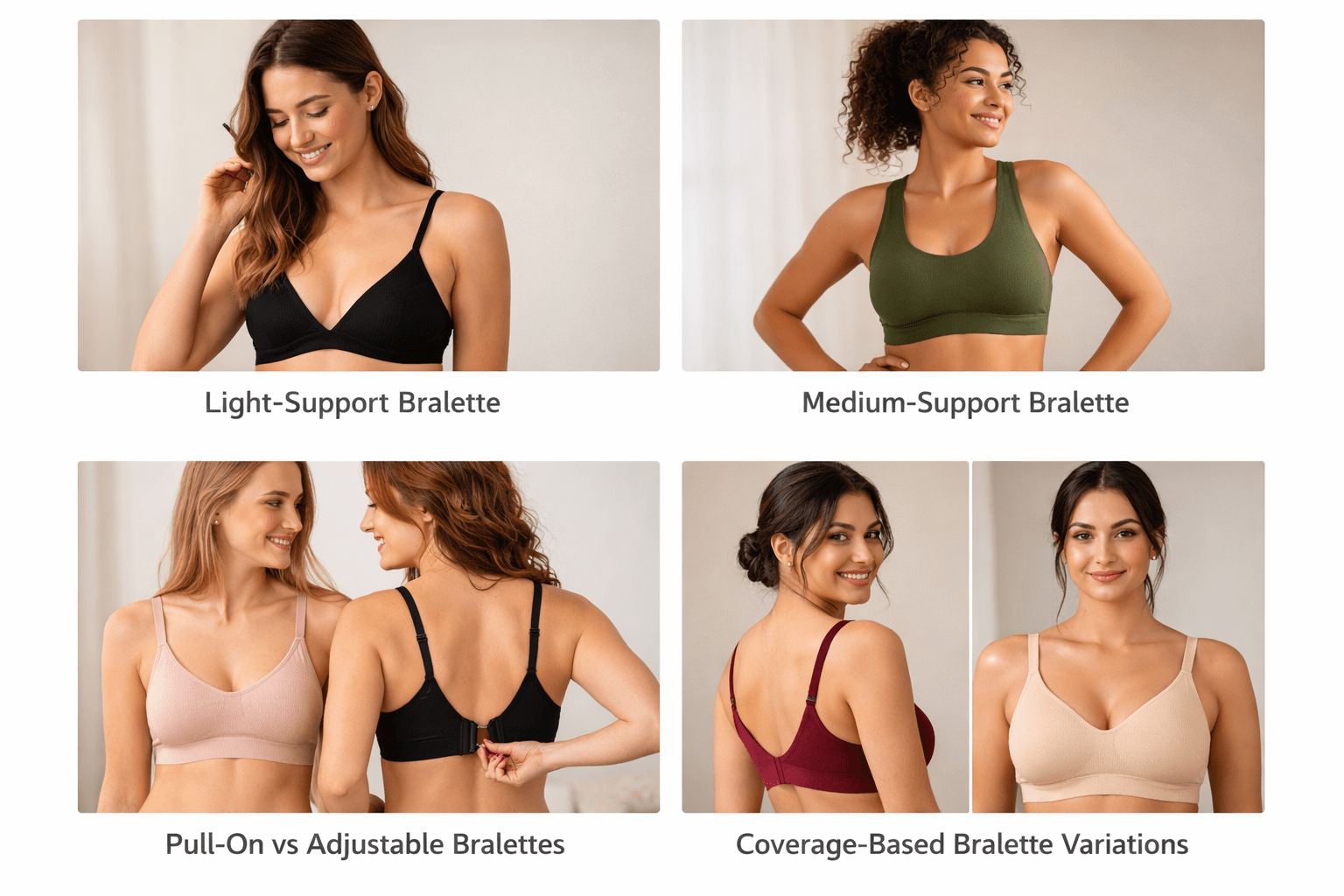
This image highlights different bralette types, showing how support, coverage, and adjustability vary across designs.

A bralette is a type of bra designed without underwire and heavy structure, focusing on comfort, flexibility, and a natural fit. It usually relies on soft cups, stretch fabrics, and a supportive band rather than rigid shaping. Unlike traditional bras, bralettes offer lighter support and a more relaxed feel. They do not use molded cups or strong wiring, which makes them less restrictive and more comfortable for everyday wear, lounging, or low-impact use.

This guide explains how bralettes work, the different types available, how they fit compared to regular bras, and how to choose the right bralette size and style based on your body and comfort needs.

What Is a Bralette?

A bralette is a type of bra designed for comfort rather than heavy structure. It sits under the broader bra category but differs in how it is built and how it supports the body. Most bralettes are wire-free and use soft cups instead of molded or padded ones. The support comes from the band, fabric stretch, and overall fit, not from rigid shaping. Because of this, the support level is usually light to moderate, depending on the design and material.

In terms of coverage, bralettes range from low to full, but they generally offer a more relaxed fit than traditional bras. Instead of lifting or reshaping the bust, a bralette supports a natural shape, allowing the breasts to sit more freely without pressure from wires or firm padding.

Key Design Features of a Bralette

Bralettes are designed with comfort and flexibility in mind. Below are the main features, broken down clearly so they’re easy to scan and understand.

Soft or Lightly Shaped Cups

  • Usually unpadded or lightly shaped

  • Allow natural movement

  • Reduce bulk under clothing

Wire-Free Construction

  • No underwire under the bust

  • Fewer pressure points

  • More comfortable for long wear

Stretch-Based Support

  • Support comes from fabric stretch and the band

  • Not from rigid structure

  • Feels more flexible than traditional bras

Strap Styles

  • Thin straps for a lighter feel

  • Wide straps for better weight distribution

  • Racerback styles for added stability

Closure Types

  • Pull-on styles with no hooks for ease

  • Hook closures for better adjustability

  • Choice affects fit control and comfort

Fabric Flexibility and Comfort

  • Soft, breathable materials

  • Designed to move with the body

  • Focused on everyday comfort rather than lift

This combination of features is what gives bralettes their relaxed fit and natural feel compared to more structured bras.

Bralette Size Chart

Bralette size charts are meant to give a general idea of fit, not an exact answer. Because bralettes rely on fabric stretch and flexible design, the same size can feel different depending on the material, coverage, and band firmness. Use the chart below to understand how bralette sizing usually works, then confirm your fit with measurements.

Bralette Size Chart

Bralette Size Typical Band Range Typical Cup Range
XS 28–30 A–B
S 30–32 A–C
M 32–34 B–D
L 34–36 C–DD
XL 36–38 D–DDD
XXL (2XL) 38–40 DD–G
3XL 40–42 DDD–H
4XL 42–44 G–I

For the most accurate result, use the Bra Size Calculator to check your measurements and confirm the best fit for your body.

Types of Bralette

Bralettes are not one single design. Small changes in shape, straps, and band length can change how much support and coverage you get. Below is a clear breakdown to help you understand why different bralette types feel different and which situations they suit best.

1: Light-Support Bralette Types

Light-support bralettes focus on comfort and freedom of movement. They work best when structure is not a priority, and the fabric does most of the work.

  • Triangle bralette
    This style uses triangular cups with minimal shaping. It follows the natural outline of the bust and feels light on the body. Triangle bralettes are often chosen for relaxed wear or for a barely-there feel.

  • Lace bralette
    Lace bralettes are soft and flexible, usually without padding. The lace provides gentle hold but not firm support. These are commonly worn for comfort, layering, or short periods of wear rather than long, active days.

  • Bandeau bralette
    A bandeau bralette is strapless and sits straight across the chest. Support comes mainly from elastic rather than straps. This type works best for low-support needs and outfits where straps are not practical.

Focus: comfort, minimal structure, and relaxed everyday or lounge wear.

2: Medium-Support Bralette Types

Medium-support bralettes offer more stability without becoming fully structured bras. These styles balance comfort with a slightly more secure fit.

  • Racerback bralette
    Racerback bralettes bring the straps closer together at the back. This helps distribute weight more evenly and reduces strap slipping. They often feel more secure than basic styles.

  • Longline bralette
    A longline bralette has an extended band that sits lower on the torso. The extra fabric helps distribute support across a wider area, improving comfort and stability.

  • Lightly padded bralette
    These bralettes include thin padding for gentle shaping. The padding does not add heavy lift but can help with modesty and a smoother outline under clothing.

Focus: better hold and stability for daily wear while staying wire-free.

3: Pull-On vs Adjustable Bralettes

The way a bralette is worn and adjusted also affects how it fits and feels.

  • Pull-on bralettes
    These styles have no hooks or clasps. They stretch to fit over the head and rely on fabric flexibility. Pull-on bralettes feel simple and comfortable but offer limited fit adjustment.

  • Adjustable bralettes
    Adjustable bralettes include straps or bands that can be tightened or loosened. This allows more control over fit, especially for different torso lengths or support preferences.

4: Coverage-Based Bralette Variations

Coverage changes how secure a bralette feels and how much fabric sits on the body.

  • Low-coverage bralettes
    These styles expose more of the chest area and feel lighter. They are usually chosen for comfort or layering rather than support.

  • Medium-coverage bralettes
    Medium-coverage designs balance openness and security. They suit everyday wear for many people.

  • Fuller-coverage bralettes
    Fuller-coverage bralettes use more fabric around the bust and sides. This can create a more contained, stable feel without wires.

Important clarity:
All of these are still bralettes. The differences change support and comfort, not your bra size.

How a Bralette Fits Compared to Traditional Bras

A bralette fits differently from a traditional bra because it is designed with comfort and flexibility as the priority, not strong structure or lift. Understanding these differences helps set the right expectations.

Support Differences

Traditional bras use underwire, molded cups, and firm bands to provide structured support. A bralette relies more on fabric stretch and the band for support. This means the support feels lighter and more relaxed, especially during long wear.

Shape and Lift Comparison

Bras are designed to lift, shape, and sometimes change the natural position of the bust. Bralettes focus on holding the breasts in place without reshaping them. The result is a more natural outline rather than a lifted or rounded silhouette.

Pressure Distribution

In traditional bras, pressure is often concentrated under the bust and along the wires. A bralette spreads pressure more evenly across the band and straps. This reduces digging, pinching, and tight spots.

Who is a Bralette Is Best Suited For?

Bralettes are not meant to replace every type of bra. They work best for certain needs and preferences, especially when comfort is the main goal.

Comfort-Focused Wearers

Bralettes are ideal for people who prioritize softness and ease over firm structure. If underwires, stiff bands, or heavy padding feel uncomfortable, a bralette offers a more relaxed alternative.

Light to Moderate Support Needs

This style suits those who do not need a strong lift or compression. Bralettes provide a gentle hold that keeps the bust supported without tight shaping, making them suitable for lighter support requirements.

Everyday, Lounging, or Relaxed Wear

Bralettes work well for daily routines, working from home, travel, or casual outings. Many people also prefer them for lounging or low-activity days when flexibility and breathability matter more than structure.

Breast Shapes That Work Well With Bralettes

Bralettes can feel different depending on breast shape because they rely on fabric stretch and band support rather than firm structure. Below is how bralettes usually work with common breast shapes.

Full on Top

Women with fuller breasts at the top may notice less lift in a bralette compared to a traditional bra. Because bralettes do not push upward, the fit can feel relaxed rather than lifted. Styles with wider straps or slightly more coverage often feel more balanced for this shape.

Full on Bottom

Bralettes often work well for fuller-on-bottom shapes because the fabric can naturally follow the lower fullness. The bust sits comfortably in the cup without feeling forced upward. Medium-coverage bralettes usually feel more secure for this shape.

Shallow Breasts

Shallow breasts spread more evenly across the chest rather than projecting forward. Bralettes usually suit this shape well because they do not rely on deep cups. The soft structure helps avoid gaping that can happen with molded bras.

Wide-Set Breasts

Wide-set breasts sit farther apart on the chest. Bralettes with center-shaping or racerback designs can help create a more connected feel. Triangle and pull-on styles often feel comfortable, though very low-support designs may feel less secure.

Close-Set Breasts

Close-set breasts sit closer together in the center. Bralettes usually feel comfortable because they lack rigid center wires. Styles with softer center panels or flexible fabric reduce pressure between the breasts.

How Bralettes Fit on Different Body Frames

Body frame plays an important role in how a bralette feels, especially because this style depends more on strap length, band placement, and overall balance than on rigid structure.

Petite Frames

On petite frames, bralettes often feel lightweight and comfortable. Strap length is important here, as straps that are too long can slip or sit loose. Bralettes with adjustable straps usually provide a better, more balanced fit for smaller frames.

Average Frames

Bralettes tend to fit most naturally on average frames because the proportions align well with standard strap and band lengths. The band usually sits evenly, and the weight is balanced between the shoulders and underbust without much adjustment.

Broader Ribcage

For a broader ribcage, band comfort becomes the most important factor. A bralette that feels too tight in the band can cause rolling or pressure. Styles with wider bands or more stretch usually feel more stable and comfortable on this frame.

Taller Frames

On taller frames, strap length and vertical balance matter most. Short straps can pull upward, reducing comfort. Bralettes with adjustable or longer straps help maintain balance and prevent the band from riding up.

Common Fit Issues With Bralettes

This table helps identify why a bralette may feel uncomfortable and shows that most fit issues are related to design, stretch, or support level rather than size alone.

Fit Issue Why It Happens What It Usually Means
Lack of support Bralettes rely on fabric stretch instead of underwire or firm cups The style or support level may be too light for your needs
Cup folding or gaping Soft cups do not hold shape the way molded cups do Coverage or cup depth may not match your breast shape
Band rolling The band is too tight, too soft, or lacks enough structure A firmer or wider band usually feels more stable
Strap slipping Straps are too long or not adjustable enough Strap placement or adjustability is not balanced for your frame
Stretch-related looseness over time Stretch fabrics naturally relax with frequent wear Re-measuring and rotating bralettes helps maintain fit

How to Get the Right Fit in a Bralette

Getting the right bralette fit depends more on measurements and fabric behavior than on cup letters alone. These points help you judge fit clearly.

Importance of Correct Band Measurement

The band provides most of a bralette’s support. If the band is too loose, the bralette will feel unsupportive. If it’s too tight, it can roll or feel uncomfortable. Measuring your underbust correctly is the first step toward a balanced fit.

Stretch vs Firmness in Bralettes

Bralettes vary in how much they stretch. Softer, stretchier fabrics are easier to adapt but may feel lighter in support. Firmer fabrics hold shape better and usually feel more secure. Knowing which feel you prefer helps narrow down the right size.

Cup Depth vs Cup Letter in Soft Styles

In bralettes, cup letters are less precise than in structured bras. What matters more is whether the fabric can comfortably cover your breast shape without folding or gaping. A good fit should feel smooth and natural, not tight or loose.

When Sister Sizing Concepts Help

If a bralette feels tight in the band but fine in coverage, or comfortable in the band but loose overall, a nearby size may be a better fit. Understanding sister sizing helps you adjust fit without changing overall comfort.

Before choosing a bralette, follow the steps in How to Measure Bra Size to ensure your fit is based on accurate measurements.

Bralette vs Similar Bra Styles

The table below shows how bralettes compare with other common bra styles in terms of support, coverage, and comfort. This makes it easier to understand when a bralette works best and when another style may feel more suitable.

Comparison Support Coverage Comfort
Bralette vs T-shirt Bra Bralettes offer light to moderate support, while T-shirt bras provide more structured support. Bralettes usually have flexible coverage; T-shirt bras offer consistent, molded coverage. Bralettes feel softer and less restrictive; T-shirt bras feel more structured but stable.
Bralette vs Sports Bra Bralettes provide a gentle hold; sports bras are designed for strong support Bralettes focus on natural coverage; sports bras offer fuller coverage and compression Bralettes are more comfortable for daily wear; sports bras are better for movement and activity
Bralette vs Wireless Bra Bralettes rely on stretch for support; wireless bras often use firmer bands and shaping Bralettes tend to have relaxed coverage; wireless bras usually offer more defined coverage Bralettes feel lighter and more flexible; wireless bras feel more supportive but still comfortable

When a Bralette May Not Be the Best Choice

Bralettes are great for comfort and everyday wear, but they aren't ideal for every situation. Knowing their limits helps avoid discomfort.

High-Impact Activities

Bralettes are not designed for intense movement. Activities like running or high-impact workouts usually require stronger compression and support than a bralette can provide.

Heavy Support Needs

If you need a strong lift or a firm hold, a bralette may feel too light. Traditional bras with more structure often provide better support for heavier busts or situations where stability is important.

Certain Outfit Requirements

Some outfits rely on a defined shape, smooth contour, or specific neckline support. Bralettes may not work well under fitted or formal clothing that requires structure.

Personal Preference for Structure

Comfort is personal. If you prefer the feel of molded cups, underwire, or a more lifted shape, a bralette may not match your comfort expectations.

In these cases, choosing a more structured bra style can provide better support and confidence.

Final Thoughts

A bralette is a comfortable, wire-free bra style that supports the body naturally without a heavy structure. Because fit can change over time, it’s a good idea to re-measure regularly to make sure your bralette still fits well and feels balanced and comfortable. Check your measurements using our Bra Size Calculator to find your most accurate fit instantly.

Frequently Asked Questions

What is the 3 bra rule?

The 3 bra rule suggests rotating between at least three bras so each one has time to rest. This helps maintain elasticity and overall fit, especially for stretch-based styles like bralettes.

How do I know my bralette size?

The best way is to start with your underbust and bust measurements. Because bralettes use flexible sizing, checking your measurements with a calculator gives a clearer result than relying on labels alone.

What is the purpose of a bralette bra?

A bralette is designed to provide comfort and light support without heavy structure. Its purpose is to offer a relaxed, natural fit rather than a strong lift or shaping.

What is the 2 finger rule for bras?

The 2-finger rule means you should be able to fit two fingers comfortably under the band or straps. This indicates the bra is not too tight, allowing proper movement and comfort.

What size bralette is a 34C?

A 34C usually falls within the Medium bralette range, though fit can vary depending on the fabric's stretch and coverage. Measurements give the most reliable guidance.

Should you size up or down in bralettes?

If you prefer a snug, more supportive feel, sizing down may work. If comfort and flexibility matter more, sizing up can feel better. Fabric stretch plays a big role.

What size bralette for 34D?

A 34D typically fits best in a Medium or Large bralette, depending on support level and design. Checking measurements helps confirm the most comfortable option.

Bra vs bralette — what’s the difference?

A bra is the general category that includes many styles. A bralette is a type of bra that focuses on comfort, flexibility, and light support rather than structure.