
Strapless Bra – Meaning, Fit, and How It Works
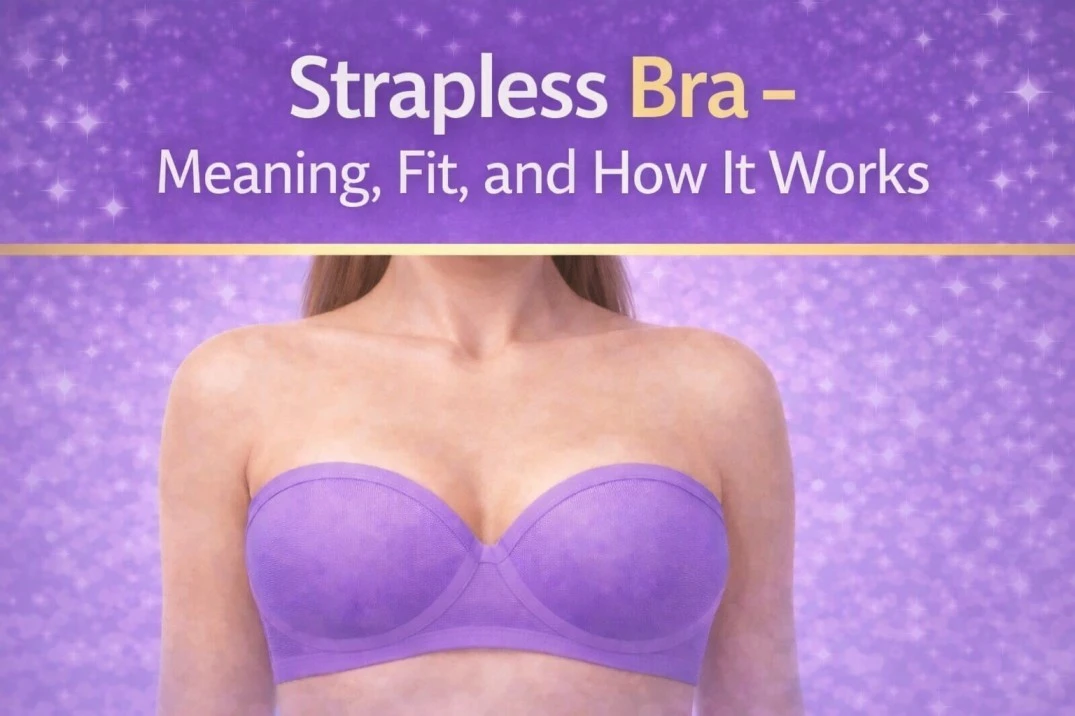
A strapless bra is a type of bra designed to stay in place without shoulder straps. Instead of lifting from the shoulders, it relies mostly on the band around the ribcage and the structure of the cups to provide support. Because the support system differs from that of a regular bra, many people find it harder to fit correctly. Common problems such as slipping, digging, or gaping usually occur when the band tension or cup depth does not match the body.
This guide explains how a strapless bra actually works, how its fit differs from traditional bras, and how body shape and measurements affect comfort and stability.
What Is a Strapless Bra?
A strapless bra is built to support the breasts without using shoulder straps. Its structure focuses on a firm band and shaped cups that hold the breasts from around the ribcage rather than lifting from above.
Structure:
The band is usually wider and firmer than in a regular bra. The cups are reinforced so they hold their shape without straps.
Coverage level:
Most strapless bras provide medium coverage across the chest, keeping the cups stable. Very low-coverage designs exist, but they offer less stability.
Support type:
Support comes mainly from horizontal tension around the torso. The bra anchors against the ribcage and holds the breasts upward using compression and cup shaping instead of vertical lift from straps.
Wired vs wireless options:
-
Wired strapless bras use an underwire and side structure to keep the cups upright and stable.
-
Wireless versions rely more on fabric tension and usually provide lighter support.
Why does it behave differently from regular bras?
In a traditional bra, support is shared between the straps and the band. In a strapless bra, almost all support must come from the band and cup structure, which affects how tight it feels and how the cups fit.
Strapless Bra Size Chart
Size charts for this style are general references only. Fit varies by design and body shape. Confirm your size using measurements.
|
Strapless Size |
Typical Band Range |
Typical Cup Range |
|
XS |
28–30 |
A–B |
|
S |
30–32 |
A–C |
|
M |
32–34 |
B–D |
|
L |
34–36 |
C–DD |
|
XL |
36–38 |
D–DDD |
|
XXL (2XL) |
38–40 |
DD–G |
|
3XL |
40–42 |
DDD–H |
|
4XL |
42–44 |
G–I |
This chart is not a replacement for measurements and should not be used to choose a bra without measuring. For the most accurate result, check your measurements using our Bra Size Calculator.
How a Strapless Bra Actually Stays Up
A strapless bra stays in place by anchoring firmly around the ribcage. Instead of pulling upward from the shoulders, it creates support through controlled tension and structural reinforcement.
Band compression provides lift
The band fits snugly around the torso and creates upward support by pressing evenly against the ribcage. This pressure keeps the cups stable and prevents the bra from dropping.
Silicone grip prevents downward movement
Many strapless bras include a thin grip lining along the upper edge of the band. This increases friction against the skin, so the bra does not slide when you move or raise your arms.
Boning stabilizes the frame
Side panels or internal boning help the bra keep its shape. They prevent the band from folding and help the cups remain upright rather than collapsing forward.
Cup structure distributes weight
The cups are reinforced so the breast weight spreads across the entire band rather than pulling downward at one point. This helps the bra feel secure without straps.
In a regular bra, the shoulders carry part of the weight. In a strapless bra, the ribcage provides most of the support.
Key Design Features of a Strapless Bra
Because a strapless bra cannot rely on shoulder straps, its stability comes from built-in structural elements. Each feature works together to keep the bra anchored and balanced on the body.
Cup construction: Usually molded or reinforced so the cups hold their shape without pulling upward from straps.
Reinforced band: Wider and firmer than regular bras to create secure support around the ribcage.
Grip lining: A thin inner strip along the upper edge increases friction against the skin and helps prevent slipping.
Boning or side panels: Vertical supports along the sides prevent the band from folding and help keep the cups upright.
Optional strap loops: Some designs allow straps to be attached for extra support.
Closure type: May use multiple hook positions or a firm pull-on band to maintain consistent tension.
Types of Strapless Bra
This style comes in different constructions that change stability and support. The structure, not the name, determines how secure it feels.
Bandeau
A simple elastic band with minimal shaping. It offers light support and relies mostly on stretch tension rather than internal structure. Often more comfortable but less stable during movement.
Structured Underwire Strapless
Built with a firm band and an underwire frame. The cups hold shape and keep the breasts positioned higher, making it one of the more supportive strapless options.
Push-Up Strapless
Includes padding or angled cup shaping that brings the breasts closer together and upward. Stability depends on how well the band fits, since added lift increases downward pressure.
Convertible / Multiway
Designed with removable straps that can be attached in different ways when needed. When worn strapless, it behaves like a regular strapless bra, but usually with a slightly lighter structure.
Adhesive / Silicone Strapless
Attaches directly to the skin instead of using a full band around the torso. Provides minimal support and mainly offers coverage rather than lift.
All of these are the same bra style. The differences affect stability and comfort, not your bra size.
How a Strapless Bra Fits Compared to Traditional Bras
A strapless bra fits differently because the support system changes. Instead of sharing weight between the shoulders and torso, the fit depends almost entirely on how the band and cups interact with the body.
No shoulder support
Regular bras use straps to help lift and balance weight. A strapless bra removes this help, so the band must hold everything in place on its own.
Higher band tension needed
The band usually feels firmer than a normal bra. This is necessary to keep the bra anchored around the ribcage rather than sliding downward.
Cup depth matters more than letter
In strapless styles, the cup shape is more important than the cup letter. If the cup is too shallow or too deep, the bra cannot stabilize properly, even if the labelled size seems correct.
Shape vs lift differences
Traditional bras lift upward from the shoulders. Strapless bras stabilize from below and around, resulting in a more natural position rather than a strong upward lift.
Anchored vs suspended support feel
A regular bra feels suspended from the shoulders. A strapless bra feels anchored around the torso and can be firmer yet more balanced when fitted correctly.
Breast Shapes That Work Well With a Strapless Bra
A strapless bra depends on how evenly the cups can rest against the chest. The closer the cup shape matches the breast shape, the more stable the bra feels.
Full on Top
Breasts with more fullness above the nipple can press against the upper cup edge. If the cup depth is correct, this helps hold the bra in place. If the cup is shallow, however, it may spill because there are no straps to pull it upward.
Full on Bottom
This shape often sits securely inside structured strapless cups because the weight rests lower in the bra. The band carries the load from underneath, which matches how strapless support works.
Shallow Breasts
Shallow breasts usually work well with lightly moulded or lower-depth cups. Because the breast does not project far forward, the cup edge stays flat against the chest, reducing gaping.
Wide-Set Breasts
Strapless bras can feel stable for wide-set breasts when the cups are spaced naturally apart. The band anchors the bra, and the cups hold their position without needing inward pull from the straps.
Close-Set Breasts
Close-set breasts may need a deeper centre cup area. If the centre is too flat, pressure can push the bra downward. A better-matched cup shape helps the bra stay balanced across the chest.
How This Style Fits on Different Body Frames
Body frame affects how evenly a strapless bra can anchor around the torso. Since the band provides most of the support, ribcage shape and torso length change how secure it feels.
Petite Frames
On smaller frames, the band has less surface area to grip. A well-fitted band usually feels secure, but cups that are too tall may reach too high on the chest and reduce stability.
Average Frames
Most strapless bras are designed around average proportions, so the band tension and cup height tend to balance naturally. Fit issues here usually come from size mismatch rather than structure.
Broader Ribcage
A wider ribcage spreads pressure over a larger area, which can improve stability when the band size is correct. However, if the band is too tight to compensate for cup mismatch, discomfort becomes noticeable more quickly.
Taller Frames
With a longer torso, the vertical distance between the bust and ribcage increases. The band must sit level and firm; otherwise, the cups may tilt or shift during movement.
How to Get the Right Fit in a Strapless Bra
A correct fit is more important in a strapless bra than in most other styles. Because there are no straps to adjust the balance, both the band and the cup must fit the body closely.
Importance of band size
The band provides nearly all the support. It should sit level around the ribcage and feel firm but not painful. If the band rides down or shifts when you move your arms, it's likely too loose.
Cup depth vs cup letter
The cup letter alone does not determine fit. What matters more is whether the cup depth matches the extent to which the breast projects forward. A correct depth keeps the cup flat against the chest and stable during movement.
Firm vs stretch fabrics
Firmer materials hold position better and reduce movement. Stretch fabrics feel softer but require more precise sizing to avoid slipping.
Sister sizing concept
If the band feels tight but the cups fit, increasing the band and decreasing the cup proportionally can improve comfort while keeping volume similar. This helps balance tension around the torso.
Measuring is more reliable than guessing
Because strapless support depends on ribcage measurements, estimating size often leads to instability. Using measurements provides a more consistent starting point.
Why Your Normal Bra Size May Not Work in Strapless
In a regular bra, straps share part of the lifting force. In a strapless bra, the band and cups must carry the full weight. This redistribution of support can make a size that feels comfortable in a traditional bra feel loose or tight in a strapless style, even when the label is the same.
Size Systems Used for Strapless Bras
Strapless bras often use simplified sizing because the fit depends on band tension and cup shape rather than precise strap adjustment.
Why do many use S/M/L sizing?
Many designs rely on stretch and compression around the ribcage, so grouped sizes allow the fabric to adapt to a range of measurements rather than a single exact band number.
Overlapping ranges
Two different labelled sizes can sometimes fit the same person. A slightly firmer size may feel more secure, while a slightly larger one may feel more comfortable, depending on preference and body shape.
Label variation
Sizing labels are not standardized across manufacturers. One brand’s medium may feel similar to another brand’s large due to differences in fabric strength and cup structure.
Measurements matter more than labels
Because strapless support depends heavily on ribcage fit, measurements provide a more reliable guide than the printed size alone.
When a Strapless Bra May Not Be the Best Choice
Although useful in certain situations, this style does not suit every activity or support need.
High-impact movement
Activities involving running, jumping, or frequent arm movement can shift the band because the bra is not designed to control vertical motion without straps.
Heavy support needs
If strong lift or maximum stabilization is required for long periods, a structured bra with straps usually distributes weight more comfortably.
Long active days
Extended walking or constant movement may gradually reduce stability as the band is repeatedly subjected to pressure and friction.
Personal comfort preference
Some people prefer less ribcage pressure. Since the band carries most of the load, the firmer feel may not be comfortable for everyone.
Wearing a Strapless Bra for Different Situations
This style is usually chosen when straps would interfere with clothing or when shoulder pressure needs to be minimized for a period of time.
Everyday outfits
Works best with stable fabrics and relaxed movement. Comfort depends on correct band tension rather than long-term activity.
Formal wear
Often used under outfits that expose the shoulders or upper chest, where visible straps would affect the appearance.
Long sitting hours
Can feel comfortable while seated because the weight stays centred on the torso instead of pulling on the shoulders.
Short-duration wear
Most suitable for limited time use, as stability relies on consistent band pressure rather than continuous movement.
Common Strapless Bra Problems (and Why They Happen)
Most strapless bra issues come from the band and cup having to support the weight without help from the straps. Small size or shape mismatches are more noticeable in small-sized or shaped bras.
Sliding down
Usually caused by a loose band or cups that are too small. The breasts push the bra downward because the band cannot anchor firmly around the ribcage.
Digging band
This often happens when the band is tightened to compensate for an incorrect cup depth. The pressure concentrates in one area instead of spreading evenly.
Cup folding
Occurs when the cup structure is softer than the breast weight or when the band is not level. The cup collapses forward instead of holding its shape.
Spillage
Caused by shallow cups. Without upward pull from the straps, breast tissue moves over the top or sides of the cup.
Gaping
Happens when cups are too deep or tall for the breast shape. The upper edge lifts away because there is no strap tension to hold it flat.
Discomfort
Usually a result of uneven pressure distribution. The bra may feel tight in one spot and loose in another when the size or structure does not match the body.
Sweat slipping
Moisture reduces friction between the band and skin, making the bra feel less stable even if the size is correct.
Common Misconceptions About Strapless Bras
Many fit problems come from misunderstandings about how this style is supposed to work. Because it supports differently from a regular bra, normal expectations do not always apply.
Cannot support larger busts
Support depends on band fit and cup structure, not only breast size. A well-fitted strapless bra can provide stable support if the band anchors properly and the cups match the breast shape.
A tight band means the wrong size
A strapless band usually feels firmer than a regular bra. Mild snugness is necessary so the bra can stay in place without straps. Discomfort comes from uneven pressure, not simply from firmness.
Only for special outfits
While often chosen to hide straps, the design is mainly about support without shoulder pressure. Some people wear it for comfort during short periods or seated activities.
Size does not matter
Correct sizing is even more important than in other bras. Without straps to adjust balance, small differences in band or cup depth can quickly affect stability.
Final Thoughts
A strapless bra supports the breasts using a band-and-cup structure instead of shoulder straps, so stability depends on how well it fits your body. Because this style relies heavily on ribcage fit, accurate measurements matter more than the size label. Use our Bra Size Calculator to quickly find the size that best matches your measurements.
Frequently Asked Questions
How to make a bra strapless?
Some bras have removable straps. After removing them, the band must fit firmly and sit level around the ribcage. If the bra was not designed to support without straps, stability may be limited.
What is a kiss bra?
A kiss bra is a low-centre bra in which the cups meet closely at the front, creating a defined centre shape. It is different from a strapless bra because it still uses straps for support.
What are strapless bras for?
They are used when shoulder straps need to stay hidden or when pressure on the shoulders should be reduced. Support comes mainly from the band and cups, rather than from straps.
Can saggy breasts wear a strapless bra?
Yes. Stability depends on proper band tension and cup depth, not on the firmness of the breast tissue. A structured cup helps hold position when the size matches the body.
Why does my strapless bra fall down?
Usually, the band is too loose, or the cups are too small, causing the breasts to push the bra downward instead of staying anchored.
Should a strapless bra feel tight?
It should feel firmer than a regular bra but not painful. Even pressure around the ribcage indicates a better fit than tight spots in one area.
Can I wear a strapless bra daily?
You can, but many people prefer it for shorter periods since the band carries most of the support and may feel firmer over time.
Do strapless bras change breast shape?
No. They position the breasts differently while worn, but they do not permanently change breast shape.