Breast Shapes That Work Well With a Push-Up Bra
A push-up bra can work for many breast shapes, but fit and comfort depend on how breast tissue is distributed on the chest. The same bra style can feel very different depending on your shape, cup size, and padding placement.
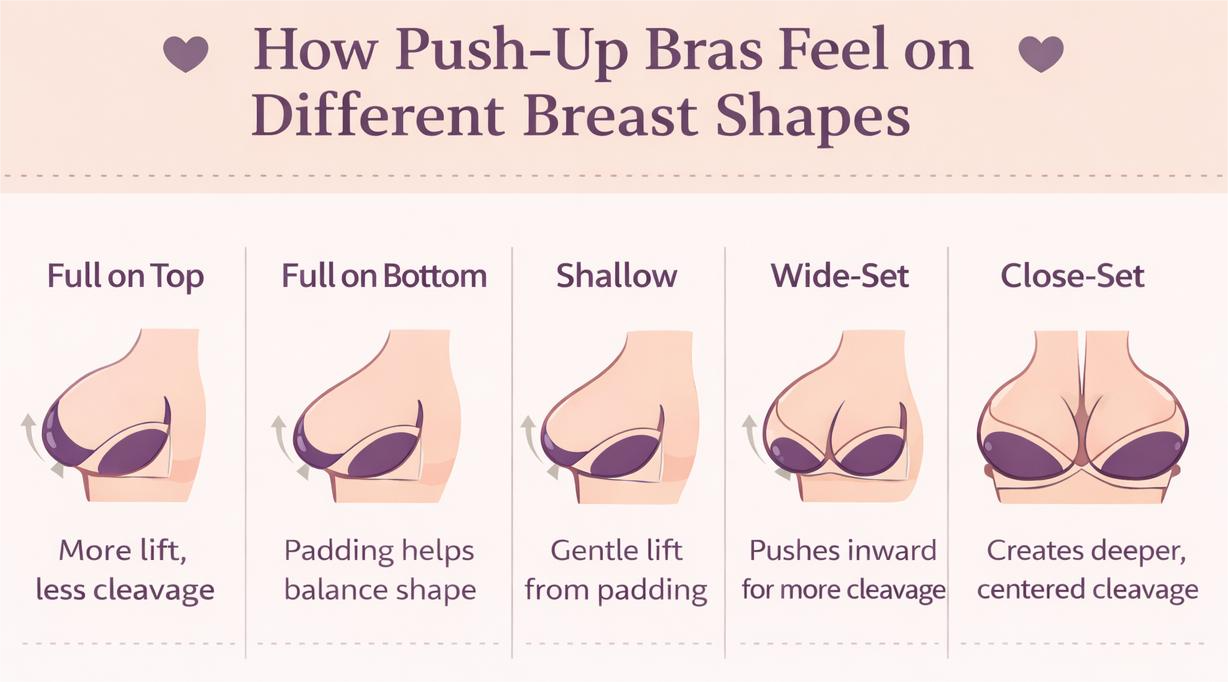
Full on Top
Breasts with more upper fullness often experience lift rather than dramatic cleavage in a push-up bra. Choosing a cup with enough depth helps avoid pressure or cutting in at the neckline.
Full on Bottom
This shape benefits from bottom padding, which lifts the breasts upward and helps create a more balanced, rounded appearance.
Shallow Breasts
Shallow breasts spread wider across the chest, so angled padding can help guide the tissue forward and create more visible shaping.
Wide-Set Breasts
Push-up bras can help draw breast tissue inward, reducing the space between the breasts and creating a more centered look.
Close-Set Breasts
Close-set breasts may feel pressure at the center in higher push styles. A lower center front or plunge shape often improves comfort.
How a Push-Up Bra Fits Compared to Traditional Bras
The fit difference comes from how each style supports and positions the breasts.
Lift vs support
Push-up bras lift the breasts upward and inward. Traditional bras support the breasts in a more natural position without strong shaping.
Shape and cleavage
Push-up bras create visible cleavage and a more centered look. Traditional bras maintain the natural breast shape under clothing.
Pressure distribution
Push-up bras apply pressure at the bottom and sides of the cups to guide breast tissue inward. Traditional bras spread pressure more evenly across the cups and band.
Comfort trade-offs
Push-up bras may feel tighter at the neckline or center, especially with higher padding levels. Traditional bras usually feel lighter and less restrictive.
Long-hour wear preference
Many people prefer everyday bras for long hours because they offer steadier support and less pressure, while using push-up bras for outfit-specific or shorter wear.
Push-Up Bra Size Chart
The push-up bra size chart provides a general starting point, but padding thickness and fabric stretch can change how a bra actually fits. Because push-up bras rely on structure and padding, the same labeled size can feel different across styles and materials.
General Size Reference Table
| Size Label |
Typical Band Range |
Typical Cup Range |
| S |
30–32 |
A–B |
| M |
32–34 |
B–C |
| L |
34–36 |
C–D |
| XL |
36–38 |
D–DD |
| 2XL |
38–40 |
DD–E |
| 3XL |
40–42 |
E–F |
| 4XL |
42–44 |
F–G |
For the most accurate fit, check your measurements using our Bra Size Calculator before choosing a size.
Size Systems Used for Push-Up Bras
Push-up bras use the same standard bra sizing systems as regular bras, but the fit can feel different because the padding changes how the cup uses space.
Core Bra Sizing Systems
Most push-up bras follow regional bra sizing systems rather than a separate sizing method.
-
US sizing
Uses even-numbered band sizes such as 28 to 56, paired with cup letters that typically range from A to N. This system is widely used in North America.
-
UK sizing
Looks similar to US sizing but uses a different cup progression. For example, UK sizing includes DD and often converts US DDD into E or F.
-
EU sizing
Uses centimeter-based band numbers such as 65, 70, and 75 instead of inches. Cup letters usually progress without double letters, such as A, B, C, D, E, F.
-
Indian sizing
Commonly follows the UK sizing structure, including band measurements and cup lettering.
-
Italian sizing
Uses a numeric system where numbers represent band equivalents, such as 1 for a 32-inch band, 2 for a 34-inch band, and so on.
Padding Levels Used in Push-Up Bras
Push-up bras are often described by the level of padding, which refers to the amount of visual lift created, not a change in actual breast size.
-
Level 1 (Gentle lift)
Creates a subtle lift, often close to a half-cup appearance. This level is commonly comfortable for fuller or semi-full busts.
-
Level 2 (Moderate lift)
Creates a more noticeable lift that can look like about one cup size under clothing. This level balances shaping and comfort for many wearers.
-
Level 3 or Level 4 (Maximum lift)
Uses thicker padding to create dramatic inward shaping. This level can add strong visual cleavage but may increase pressure at the neckline.
How a Push-Up Bra Fits on Different Body Frames
A push-up bra can fit very differently depending on body frame, because strap length, band tension, and cup placement affect balance and comfort. Even with the same bra size, body proportions change how lift and pressure feel.
Petite Frames
Shorter torsos often need shorter strap length and lower cup height to avoid gaping or excess fabric near the neckline. A compact cup shape usually feels more balanced.
Average Frames
Average frames tend to experience more balanced support, as most push-up bras are designed around standard proportions. Fit issues usually come from the padding level rather than the structure.
Broader Ribcage
A broader ribcage relies heavily on proper band tension. If the band is too loose, the padding cannot lift effectively, and straps may dig in to compensate.
Taller Frames
Taller frames may need more bottomless cups or slightly higher cup placement to maintain balance. Shallow cups can sit too low, reducing lift on longer torsos.
Push-Up Bra vs Similar Bra Styles
The main differences come from how each style shapes the bust and distributes support.
| Feature |
Push-Up Bra |
Padded Bra |
T-Shirt Bra |
Demi Bra |
| Lift |
High |
Low to medium |
Low |
Medium |
| Coverage |
Medium |
Medium |
Full |
Low |
| Comfort |
Varies by padding and fit |
High |
High |
Medium |
| Shape focus |
Inward and centered |
Added volume |
Smooth outline |
Open neckline |
Who Should Not Wear a Push-Up Bra?
A push-up bra may not be suitable for people who need high support, prefer a natural drape, or are recovering from medical or surgical procedures. While many people enjoy push-up bras, certain situations and comfort needs make other bra styles a better choice.
High-impact activity needs
Push-up bras are not designed to control movement during activities like running or workouts, where a sports bra provides better support.
Sensitivity at the neckline or sternum
The inward pressure and padding can cause discomfort if you are sensitive in the center of the chest or along the neckline.
Preference for natural drape
If you prefer your breasts to sit naturally without shaping or compression, an everyday or unlined bra may feel more comfortable.
Medical or post-surgery recovery periods
After procedures involving the chest or breasts, softer and less structured bras are usually recommended during healing.
Early post-implant healing stage
Push-up bras should be avoided until full recovery and professional guidance confirms it is safe to wear structured or padded bras.
Common Fit Issues With Push-Up Bras
Most push-up bra fit issues happen when the cup shape, padding level, or band fit do not match the body.
| Issue |
Why It Happens |
What It Means |
| Quad-boob |
Cup is too shallow |
More cup depth is needed |
| Gaping |
Padding does not match breast shape |
Try a different cup structure |
| Strap digging |
Band is too loose |
Band is not carrying support |
| Side bulge |
Cup width mismatch |
Cup shape is incorrect |
| Neckline pressure |
Excess padding |
High push level may not be suitable |
Final Thoughts
A push-up bra can change how the breasts sit and appear, but comfort and fit depend on choosing the right structure and size. Sizing can change over time due to body changes, so re-measuring regularly helps maintain a better fit and avoids discomfort. Check your measurements using our Bra Size Calculator to find your most accurate fit instantly.

