
Plunge Bra – Meaning, Fit, and How It Works
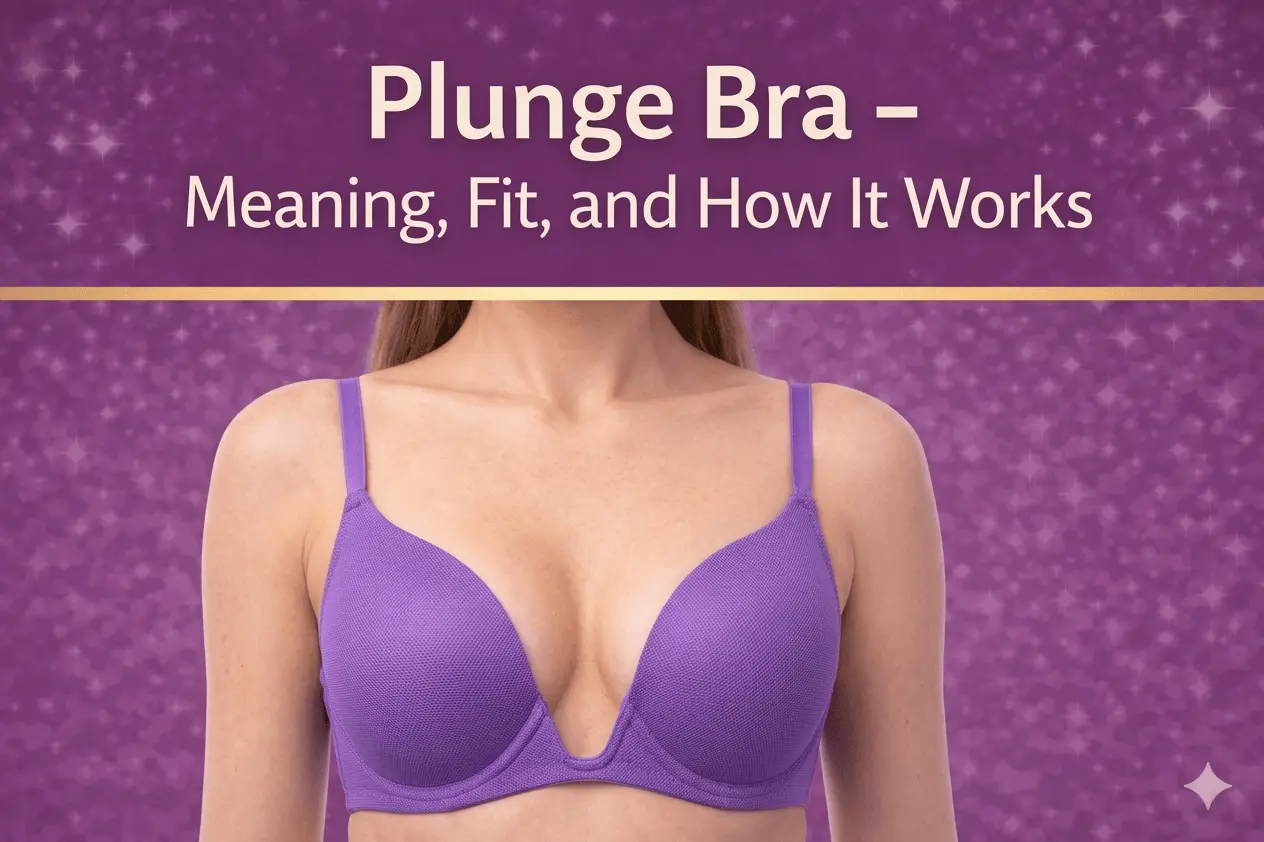
A plunge bra is a bra type designed with a low center gore and a deep V-shaped neckline. The center front sits much lower than in traditional bras, allowing the cups to form a more open shape across the chest. This structure makes plunge bras suitable for outfits with low or deep necklines.
Compared to standard bras, a plunge bra offers less coverage at the center and upper part of the cups. However, this does not mean less support. The support comes from the band, cup construction, and overall fit, not just the height of the center panel. When the size and structure are correct, a plunge bra can provide stable support and a secure fit.
In this guide, you will learn how a plunge bra is structured, how it differs from traditional bras, and who it is best suited for.
What Is a Plunge Bra?
A plunge bra is a bra type defined by its low center front and deep V-shaped neckline. The center panel between the cups sits lower on the chest compared to most standard bras, creating a more open shape across the bust.
The cups are designed at an inward angle, which allows the bra to follow the natural line of a deeper neckline. This structure is what makes the plunge bra distinct from other bra types, with a higher center front and a more horizontal cup shape.
In terms of overall structure, a plunge bra typically offers low to medium coverage, with greater openness at the center and upper cup. Depending on the construction, it can provide moderate to high support.
Key Design Features of a Plunge Bra
A plunge bra is defined by specific structural elements that shape its fit and function. These features work together to create its distinct neckline and support behavior.
Low center gore
The center panel sits lower than in most bras, creating a deep V shape. This design reduces coverage at the center, keeping the bra hidden under low-cut clothing.
Angled cup construction
The cups are designed at an inward angle rather than straight across. This helps guide breast tissue toward the center while maintaining a natural shape.
Cup depth variation
Plunge bras can have shallow or deeper cups depending on the design. This affects how securely the breast tissue is held and how the bra sits against the body.
Wider strap placement
Straps are usually attached closer to the outer edge of the cups. This placement supports the angled cup design and helps keep the neckline open.
Wired or wire-free design
Some plunge bras include underwire for added structure and shaping, while others are wire-free for a lighter and more flexible feel.
Padding variations
Plunge bras may include light, medium, or no padding. The padding level changes the shape and feel but does not change the core structure.
Closure options
Most plunge bras use a back hook closure, while some designs include front closures for easier wear and a smoother back.
Types of Plunge Bra
Plunge bras come in different variations based on support, shaping, and comfort preferences. These variations do not change the core structure but affect how the bra feels and performs.
Non-Padded Plunge Bra
A non-padded plunge bra provides a more natural shape without added volume. The cups follow the body closely, making it a lighter and less bulky option.
-
Natural shape
The cups do not add extra lift or volume, so the natural breast shape remains unchanged. -
Lightweight feel
With less material inside the cups, this type often feels more breathable and suitable for extended wear.
Padded / Push-Up Plunge Bra
This variation includes padding to change the overall shape and lift. Some designs include push-up padding placed at the bottom or sides of the cups.
-
Extra lift
Padding helps raise the breasts slightly, creating a more defined shape. -
Enhanced cleavage
The combination of angled cups and padding brings the breasts closer together, making the center appear more defined.
Wired vs Wireless Plunge Bra
Plunge bras are available in both wired and wireless constructions, each offering a different experience.
-
Structured support (wired)
Underwire helps maintain cup shape and provides a firmer hold, especially for longer wear. -
Flexible comfort (wireless)
Wire-free designs allow greater movement and reduce pressure, offering a softer, more relaxed feel.
Deep Plunge Variations
Some plunge bras are designed with an even lower center front than standard plunge styles. These are often made for specific outfit needs.
-
Extremely low center
The center gore drops further down, creating a more open neckline. -
Occasion-based use
These designs are typically chosen for outfits with very deep necklines, where standard plunge bras may still be visible.
Plunge Bra Size Chart
Size charts for plunge bras are meant as a general reference only. Fit can vary depending on cup design, fabric stretch, and overall construction. Use this chart to understand typical sizing, then confirm your measurements for better accuracy.
|
Bra Size |
Underbust (Band) |
Bust Measurement |
|
30A–30C |
25–27 inches |
30–33 inches |
|
32A–32D |
27–29 inches |
32–36 inches |
|
34A–34DD |
29–31 inches |
34–39 inches |
|
36B–36E |
31–33 inches |
36–41 inches |
|
38B–38F |
33–35 inches |
38–44 inches |
|
40C–40G |
35–37 inches |
40–47 inches |
|
42C–42H |
37–39 inches |
42–49 inches |
If you fall between sizes, comfort preference and fabric stretch matter more than the label.
How a Plunge Bra Fits Compared to Traditional Bras
A plunge bra fits differently from traditional bras because of its lower center front and angled cup structure. These differences affect how support is distributed and how the bra shapes the bust.
Lower center = different pressure distribution
The lower center gore reduces pressure at the sternum compared to bras with a higher center panel. Support is distributed more across the band and the cup sides than in the center.
Less top coverage
Plunge bras have a more open upper cup area, which means less coverage across the top of the breast. This creates a different fit feel compared to full coverage or balconette styles.
More inward shaping
The angled cups guide the breast tissue toward the center, creating a closer-set appearance. This inward shaping is more noticeable than in bras with straight-across cup designs.
Lift vs push-up difference
A plunge bra provides lift through its cup angle and structure, while a push-up bra relies on padding to raise the breasts. Not all plunge bras include push-up padding, so the level of lift can vary based on design.
Breast Shapes That Work Well With a Plunge Bra
The way a plunge bra fits can vary depending on breast shape. Its low center and angled cups interact differently with the distribution of breast tissue.
Close-Set Breasts
This shape typically works well with plunge bras. The lower center front allows the cups to sit comfortably without pressing too tightly at the center.
-
The inward cup angle supports natural positioning
-
Less center pressure compared to higher gore bras
Wide-Set Breasts
Plunge bras may be less effective for shaping in this case. The inward angle may not fully bring the breasts together.
-
The center gap may remain more visible
-
Fit can feel less secure in the inner cup
Full on Top
This shape may experience fit challenges due to the lower cup height.
-
Higher chance of spillage at the top edge
-
May require deeper or more structured cups
Full on Bottom
Fit depends on the cup's design and the amount of depth it provides.
-
Shallower cups may not fully contain lower fullness
-
Well-shaped cups can provide balanced support
Shallow Breasts
Plunge bras can work well for this shape due to the open neckline and cup angle.
-
Cups sit more smoothly without excess space
-
Less likelihood of gaping at the top
How This Style Fits on Different Body Frames
A plunge bra can fit differently depending on the overall body frame and proportions. Factors like torso length, ribcage width, and shoulder structure can affect how the bra sits and feels.
Petite Frames
On smaller frames, the lower center front often sits comfortably without taking up too much chest space.
-
Straps may feel slightly wider-set on narrower shoulders
-
Cup height usually aligns well with a shorter torso
Average Frames
For average body proportions, plunge bras tend to fit as intended without major adjustments.
-
Balanced strap placement and cup positioning
-
Center front sits naturally without excess pressure
Broader Ribcage
A wider ribcage can change how the band and cups distribute support.
-
Band tension becomes more important for stability
-
Straps may sit more comfortably due to a broader shoulder width
Taller Frames
On taller frames, torso length can affect how the plunge structure aligns with the chest.
-
The lower center may sit higher relative to overall torso length
-
Cup placement may feel slightly lower depending on the design
How to Get the Right Fit in a Plunge Bra
Getting the right fit in a plunge bra depends on how well the band, cups, and fabric work together. Since the center is lower, correct sizing becomes even more important for support and comfort.
Band importance
The band provides most of the support in a plunge bra. It should sit snug and level around your ribcage without riding up. A loose band can reduce support, especially because the center front is lower.
Cup containment
The cups should fully hold the breast tissue without spillage at the center or sides. Because plunge bras offer less coverage, even minor sizing issues can lead to gaps or overflows.
Cup depth vs shape
Cup depth matters as much as cup size. A cup that is too shallow may push tissue outward, while a deeper cup can provide better containment depending on your breast shape.
Stretch vs firm fabric
Stretch fabrics are easier to shape but may offer less hold. Firmer materials provide more structure and stability, especially in plunge bras designed for stronger support.
For a more accurate starting point, use the Bra Size Calculator to check your measurements before choosing a plunge bra.
Plunge Bra vs Similar Bra Types
Plunge bras are often compared with other common bra types because they may look similar at first. The main differences come from structure, coverage, and how each bra shapes the bust.
Plunge vs Push-up Bra
The key difference is how lift and shaping are created.
-
Plunge bra
Uses angled cups and a low center front to bring the breasts inward. Lift comes from structure rather than heavy padding. -
Push-up bra
Uses padding (usually at the bottom or sides) to push the breasts upward and enhance volume.
Plunge vs T-shirt Bra
These two differ mainly in surface finish and neckline compatibility.
-
Plunge bra
Designed for deeper necklines, a lower center front, and a more open cup shape. -
T-shirt bra
Focuses on a smooth, seamless surface with higher coverage, making it less suitable for low-cut outfits.
Plunge vs Balconette Bra
The difference comes down to coverage level and strap positioning.
-
Plunge bra
Has a low center front, angled cups, and typically wider-set straps. -
Balconette bra
Has a higher center front with more horizontal cup coverage and straps placed slightly closer to the center, creating a more open upper neckline.
When This Style May Not Be the Best Choice
While a plunge bra works well for many situations, it may not suit every need. Its lower center and reduced coverage can limit its performance in certain cases.
High-impact activity
Plunge bras are not designed to control movement during intense physical activity. For better support in these situations, a more structured option is usually needed.
Heavy bust without proper structure
For fuller busts, plunge bras without strong support features (such as firm bands or structured cups) may not offer sufficient stability.
High coverage needs
If you prefer more coverage across the top or center of the bust, a plunge bra may feel too open due to its lower neckline.
Certain breast shapes
Some shapes may not align well with the lower cup structure, leading to fit issues such as spillage or gaps, depending on cup depth and design.
Common Fit Issues With a Plunge Bra
Because of its lower center and open-cup design, a plunge bra can reveal fit issues more quickly than other bra types. Small sizing or shape mismatches can affect both comfort and support.
Center gore not sitting flat
The center panel may lift away from the chest instead of lying flat. This often happens when the cup size is too small or the cup shape does not match your breast distribution.
Spillage (very common here)
Due to lower coverage, breast tissue may spill out at the center or top of the cups. This is usually a sign that the cups are too small or not deep enough.
Gaping
Empty space at the top or the inner edge of the cups can occur if the cups are too large or too shallow for your shape. This is more noticeable in plunge bras because of the open neckline.
Straps slipping (due to wider placement)
Since straps are positioned farther apart, they may slide off narrower shoulders. Proper adjustment or strap style can help reduce this issue.
Lack of support in the wrong size
If the band is too loose or the cups are not supportive enough, the bra may not hold the bust securely. In plunge bras, proper band fit is especially important because the center provides less structural support.
Final Thoughts
A plunge bra is defined by its low center front and angled cups, designed to work with deeper necklines while still providing support when fitted correctly. Fit always depends on accurate measurements rather than style alone, so choosing the right size is essential for comfort and support. Check your measurements using our Bra Size Calculator to find your most accurate fit instantly.
Frequently Asked Questions
Does a plunge bra increase cleavage?
A plunge bra can create a more defined center shape due to its angled cups, but it does not always increase cleavage unless padding is included.
Is a plunge bra good for a big bust?
Yes, if it has a proper structure like a firm band and supportive cups. The fit and construction matter more than the style itself.
Can you wear a plunge bra daily?
Yes, as long as it fits correctly and provides enough support for your comfort throughout the day.
Why does a plunge bra cause spillage?
Spillage usually happens when the cup size is too small or the cup shape does not match your breast shape.
Do plunge bras push breasts together?
Yes, the angled cups guide the breasts inward, creating a closer-set appearance without necessarily adding extra lift.