
A Detailed Guide to Balconette Bra
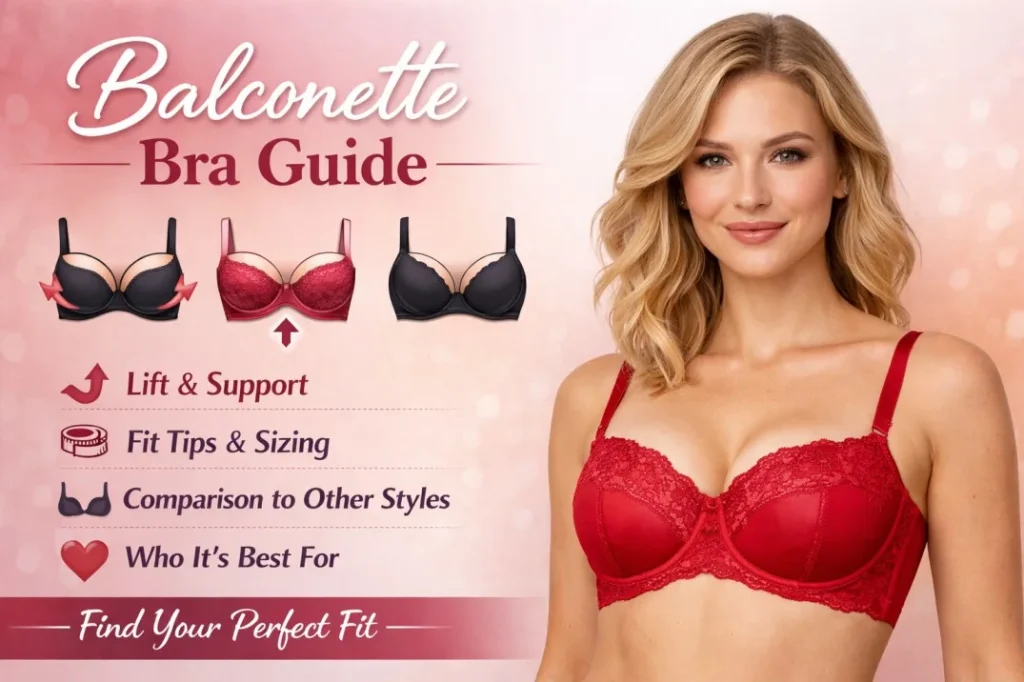
A balconette bra is a structured bra with a horizontal cup neckline and an upward-lifting shape. Instead of pulling the breasts inward, it raises them from below to create a more open and natural position on the chest.
This makes it different from push-up bras, which focus on cleavage, and from full-coverage bras, which provide more complete coverage for containment. Because the upper cup edge is straighter and lower, some people notice gaping at the top or cutting into tissue when the cup depth or shape does not match the body.
This guide explains how a balconette bra supports the bust, how its fit differs from other bras, and how body shape and measurements affect comfort and stability.
What Is a Balconette Bra?
A balconette bra is designed to lift the breasts upward while leaving the upper chest more open than many other styles.
Cup cut shape (horizontal upper edge)
The top edge of the cups runs almost straight across the bust instead of curving high over it. This shape supports from underneath rather than enclosing the entire breast.
Strap placement (wide-set)
The straps sit farther apart on the shoulders. Their role is mainly to stabilize the cups, not to pull the breasts upward.
Coverage level (half to three-quarters)
It usually covers the lower and middle portions of the breast, leaving more upper fullness visible than full-coverage bras.
Wired vs non-wired versions
Most balconette bras use an underwire to hold the lower cup structure in place. Some non-wired versions exist, but they typically provide lighter shaping and rely more on fabric tension.
Balconette Bra Size Chart
Size charts for this style are general references only. Fit varies by design and body shape. Confirm your size using measurements.
|
Balconette Size |
Typical Band Range |
Typical Cup Range |
|
XS |
28–30 |
A–B |
|
S |
30–32 |
A–C |
|
M |
32–34 |
B–D |
|
L |
34–36 |
C–DD |
|
XL |
36–38 |
D–DDD |
|
XXL (2XL) |
38–40 |
DD–G |
|
3XL |
40–42 |
DDD–H |
|
4XL |
42–44 |
G–I |
This chart does not replace measurements and should not be used to choose a bra without measuring. Use our Bra Size Calculator to quickly find the size that best matches your measurements.
How a Balconette Bra Lifts the Bust
A balconette bra supports the breasts by lifting from underneath rather than pulling from above. Its structure changes the direction of support compared to many other bra styles.
The lower cup acts like a shelf
The bottom section of the cup holds the breast tissue and lifts it upward. This creates support without enclosing the entire upper breast.
Underwire supports from below
The underwire follows the base of the breast and provides a firm foundation. It helps keep the lifted position stable instead of allowing the tissue to settle downward.
Straps stabilize, not lift
The straps mainly keep the cups aligned against the chest. They prevent shifting but do not carry most of the weight when the fit is correct.
Creates upward projection instead of an inward push
Because the lift comes from underneath, the breasts move upward and outward rather than toward the center.
A push-up bra pushes inward for cleavage, while a balconette lifts upward for shaping.
Key Design Features of a Balconette Bra
A balconette bra relies on its construction to create lift from below rather than coverage from above. Each design element helps keep the cups stable while maintaining the open neckline shape.
-
Horizontal cup edge: Straighter upper cup line that leaves the top of the chest more open
-
Wide-set straps: Positioned toward the outer shoulders to stabilize rather than lift
-
Structured lower cup panels: Reinforced sections that raise and support the breast from underneath
-
Firm band support: Anchors the bra around the ribcage to hold the lifted position
-
Center gore position: Sits between the breasts to keep the cups separated and aligned
-
Optional padding variations: May include light padding or shaping layers to adjust projection without changing the overall style
Types of Balconette Bra
This style appears in several constructions that change how firm or shaping the support feels while keeping the same neckline and lift direction.
Unlined Balconette
Made with minimal internal padding. It follows the natural breast shape and provides lighter shaping with clearer cup depth feedback.
Padded Balconette
Includes foam or shaping layers that smooth the outline and increase structure. It can feel more stable because the cups hold their form more firmly.
Side-Support Balconette
Adds extra panels along the outer cup to guide the breast inward slightly while still lifting upward from below.
Strapless Balconette
Uses a reinforced band and structured cups to maintain the balconette shape without relying on straps for stability.
Longline Balconette
Extends the band further down the torso to spread pressure over a larger area and increase anchoring support.
All of these are the same bra style. The differences affect shaping and support, not your bra size.
How a Balconette Bra Fits Compared to Other Bras
A balconette bra feels different because the lift comes mainly from the lower cup structure rather than from strong strap tension or full coverage around the breast.
Lift direction vs push-up
A push-up bra moves the breasts inward toward the center. A balconette bra lifts upward from below, creating a raised but more natural spacing.
Coverage vs full-cup
Full-cup bras surround most of the breast to contain movement. A balconette leaves more of the upper breast open, so the fit depends more on matching the cup shape to the body.
Strap role vs plunge bras
Plunge bras use straps to help position the breasts inward and stabilize the low center. In a balconette, straps mainly keep the cups aligned rather than providing most of the lift.
Pressure distribution differences
Because support comes from the lower cup and band, pressure spreads along the base of the breast and the ribcage rather than being shared heavily with the shoulders.
Breast Shapes That Work Well With a Balconette Bra
The open upper edge and upward lift make this style depend strongly on how the breast fills the lower cup. When the shape matches the cup design, the bra feels stable and balanced.
Full on Top
Upper fullness can press against the straight cup edge. If the cup depth is correct, this helps maintain lift, but shallow cups may cut into tissue because the neckline is lower than that of full-coverage styles.
Full on Bottom
This shape usually works well because most of the breast weight rests in the lower cup, where the balconette provides support from below.
Shallow Breasts
Shallow breasts often fit smoothly into lightly structured balconettes. The open neckline reduces empty space at the top, minimizing gaping when the cup height matches the chest.
Wide-Set Breasts
Wide strap placement and separated cups allow the breasts to sit naturally without forcing them inward, making the bra feel more comfortable across the chest.
Close-Set Breasts
Close-set breasts may require a narrow center gore. If the center panel is too wide, it may not sit flat, which can affect stability and comfort.
How This Style Fits on Different Body Frames
Body proportions influence how the lower cup and band share support. Because a balconette is lifted from below, ribcage width and torso length affect stability and comfort.
Petite Frames
On smaller frames, taller cups or wider straps may sit higher on the chest or closer to the shoulders. A proportional cup height helps maintain the lifted shape without shifting.
Average Frames
Most balconette designs are balanced around average proportions, so the lift and strap placement usually feel natural when the size matches measurements.
Broader Ribcage
A wider ribcage spreads the band pressure across a larger area, which can improve comfort. However, if the band is tightened to compensate for cup mismatch, pressure becomes noticeable more quickly.
Taller Frames
With a longer torso, the vertical distance between bust and band increases. The band must remain level to ensure the lower cup supports properly; otherwise, the lift may feel uneven during movement.
Common Balconette Bra Fit Problems (and Why They Happen)
Because this style has a lower, straighter neckline and lifts from underneath, small mismatches in size or shape become noticeable quickly.
Top edge cutting in
Happens when the cup is too shallow or small. The upper breast presses against the straight cup edge since the bra does not cover as high as full-coverage styles.
Upper cup gaping
Occurs when the cup is too tall or deep for the breast shape. Without enough upper fullness, the top edge cannot stay flat against the chest.
Center gore floating
If the cups are too small or the breast projection exceeds the cup depth, the center panel lifts away from the chest instead of resting flat.
Strap slipping outward
Wide-set straps can slide off the shoulders if they are adjusted too loosely or if the band is not holding the cups in place.
Band riding up
Usually caused by a band that is too loose. When the band moves upward, the lower cup cannot support properly, reducing lift.
How to Get the Right Fit in a Balconette Bra
A proper fit keeps the lower cup supporting the breast while the upper edge rests smoothly without pressure or gaps.
Band importance
The band anchors the lift. It should stay level around the ribcage and provide firm, even pressure.
Cup depth vs openness
Balconette cups vary in the degree of openness at the top. Matching both the depth and the neckline shape to the breast prevents cutting or gaping.
Strap adjustment purpose
Straps help keep the cups aligned, but should not carry most of the weight. Over-tightening them can distort the cup position.
Difference Between Balconette Bra and Similar Bras
Different bra styles shape and support the bust in different ways. A balconette bra focuses on lifting upward from below, while other styles change direction or coverage.
Balconette vs Push-Up
Support:
Push-up bras use padding and angled cups to move the breasts inward. Balconette bras are mainly supported by the lower cup structure.
Coverage:
Push-up styles vary, but they often feature deeper center shaping. Balconette cups stay more open across the top.
Lift direction:
Push-up creates an inward cleavage. Balconette creates upward projection.
Comfort:
Push-up pressure concentrates toward the center. Balconette pressure spreads along the base of the breast.
Balconette vs Full-Coverage
Support:
Full-coverage bras surround most of the breast to control movement. Balconette bras lift without enclosing the upper breast.
Coverage:
Full coverage provides maximum containment. Balconette provides moderate coverage with an open neckline.
Lift direction:
Full coverage supports evenly around the breast. Balconette rises from underneath.
Comfort:
Full coverage distributes pressure across more fabric. Balconette feels lighter on the upper chest but firmer at the base.
Balconette vs Plunge
Support:
Plunge bras rely more on straps and angled cups to position the breasts inward. Balconette relies on the lower cup structure.
Coverage:
Plunge bras have a low center front. Balconette has a higher center and straighter top edge.
Lift direction:
Plunge directs the breasts inward. Balconette directs them upward.
Comfort:
Plunge styles may feel lighter in the center, while balconette bras feel more balanced across the lower bust.
Common Misconceptions About Balconette Bras
Because the neckline is lower and straighter, this style is often misunderstood. Many fit issues come from expectations rather than the design itself.
Only for small busts
The design depends on cup structure and band support, not bust size alone. With the correct depth and band fit, it can support a wide range of sizes.
Always creates cleavage
A balconette lifts upward, not inward. Cleavage depends on breast spacing and cup shape, not simply the style name.
Not supportive
Support comes from the lower cup and band. When fitted properly, it provides a stable lift rather than compression.
Size doesn’t matter
Small differences in cup depth or band tension quickly affect comfort in this style. Accurate sizing is important for proper lift and alignment.
When a Balconette Bra May Not Be the Best Choice
High-impact activity
Movement like running or jumping requires stronger containment than this style is designed to provide.
Maximum coverage preference
If a full-enclosure bra is preferred, a higher-coverage bra may feel more secure.
Very projected breast shapes (edge cutting)
When the projection exceeds the cup depth, the upper edge may press into tissue instead of resting smoothly.
Personal comfort preference
Some people prefer minimal pressure along the base of the breast, while this style concentrates support there.
Final Thoughts
A balconette bra lifts the bust from below while keeping the upper chest more open than fuller-coverage styles. Because its fit depends on matching cup shape and band tension, checking your measurements gives a more reliable result than relying on the label alone.